Your baby is three months old and suddenly wants to chew your knuckle. Or they're four months, sleeping badly, drenching every bib in the house. Is it teeth? Probably. Maybe. That's the problem with teething — the signs overlap with about six other things, and nobody hands you a receipt with a date on it.
Here's what I tell parents in my circle when they ask me when do babies start teething, what the signs actually look like, and what genuinely helps: the average first tooth shows up between 6 and 10 months, but the discomfort starts weeks before you see anything. I've watched this play out with my own two kids and with a dozen friends' babies, and the pattern is consistent enough to plan around. What isn't consistent is the timeline everyone quotes.
Key Takeaways
- Teething signs typically begin around 3 to 4 months, even though the first tooth usually erupts between 6 and 10 months.
- Gum swelling, heavy drooling, and night waking are the earliest reliable signals — not fever.
- The 24 to 48 hours before a tooth breaks through are usually the worst.
- A temperature above 38°C (100.4°F) is not normal teething and deserves a call to your pediatrician.
- Chewing pressure, cold, and gentle gum massage work better than most of what's sold in pharmacies.
- Molars hurt more than front teeth, and they arrive later — long after most parents stop expecting it.
When do babies start teething signs?
Three months. That's the number I'd give you if you forced me to pick one, and it surprises most parents because the books keep saying "around six months." The books are describing the tooth. I'm describing the weeks of misery that come before it.
What actually happens: the tooth bud starts moving upward through the gum tissue. That pressure is what your baby feels. Nothing has erupted yet, nothing is visible, and your pediatrician may look in there and say "I don't see anything." Meanwhile your baby is chewing their fist raw.
The real timeline, stage by stage
| Age | What's happening | What you'll notice |
|---|---|---|
| 0–3 months | Gums are smooth, no bud movement | Drooling may start for other reasons; fussiness is usually gas or growth spurts |
| 3–5 months | Teeth begin shifting under the surface | Swollen gums, constant chewing, ruined sleep, rivers of drool |
| 6–10 months | First incisors erupt | A white edge appears; the 48 hours before are the worst |
| 10–14 months | Upper incisors, then first molars | Molars are the heavy hitters — bigger surface, more pressure |
| 16–22 months | Canines, then second molars | Many parents forget this stage exists. Their baby reminds them. |
Personal experience: my eldest cut her first tooth at five months and my youngest at nine. Same parents, same house, four months apart. If you're comparing your baby to a cousin or a neighbor's kid, stop. You'll only drive yourself up the wall.
How to tell if baby is teething soon
Look at the gums. That's the tell nobody mentions enough. Two or three days before a tooth erupts, the gum over that spot turns from pale pink to a darker, shinier red, and it feels firmer to the touch. If you run a clean finger along the ridge and feel a slight bump under the surface, you're close.
Beyond that, watch for the combination — not one sign alone:
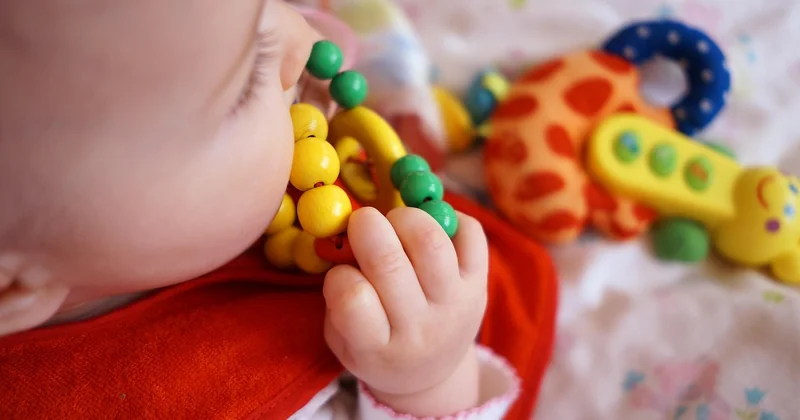
- Chewing everything, including things that clearly aren't meant to be chewed
- Waking up more at night when they'd been sleeping through
- Refusing the breast or bottle for a second, then latching again — that pull-and-release pattern
- Drool rash on the chin, cheeks, or neck, because saliva sits on skin and irritates it
- A slightly raised temperature, up to about 37.8°C, never higher
One thing I got wrong early on: I read every symptom as teething. Turned out my daughter had an ear infection and I spent four days giving her cold washcloths. If your baby is pulling at their ears and has a fever and is crying differently than usual, that's a doctor visit, not a teething ring.
Signs of teething at 2 months — is that possible?
Can babies start teething at 2 months? It happens, but it's uncommon. True early teething — a tooth erupting before four months — occurs in a small minority of babies, and when it does, there's often a family history of early eruption. I know one family where all four children cut their first tooth before four months. Genetics, not luck.
What's far more likely at two months: a growth spurt, reflux, or just a hungry baby on a cluster-feeding day. Those produce drooling and fussiness that look identical to teething from the outside. Ask yourself whether the behavior started suddenly and lasted a day or two. Teething discomfort builds over weeks.
Do breastfed babies show different signs?
Not really, with one exception. A breastfed baby who's teething will often change their latch rhythm — they'll nurse in short bursts, pull off, and come back. Some will refuse the breast entirely for a feed or two. That's usually pressure pain in the gums, and it can be confusing if you're used to a steady feeder. It's not a nursing strike and it's not a supply problem.
When is the most painful day of teething?
The 24 to 48 hours right before the tooth breaks through the gum surface. That's the peak. Once the crown pops out, the pressure releases and most babies settle within a day or two.
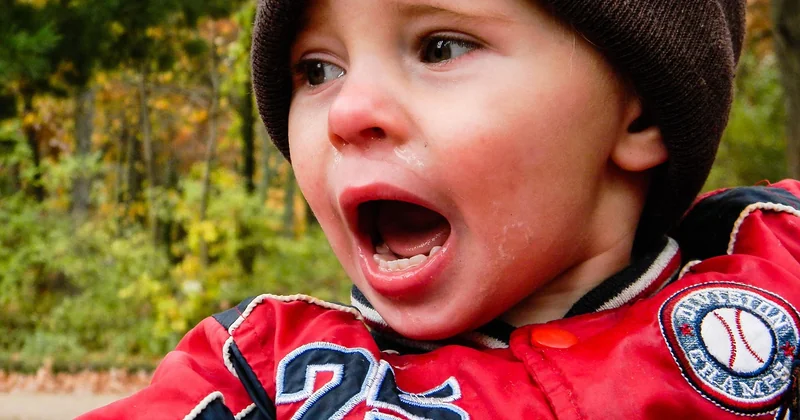
Which teeth hurt most? The first molars, and it isn't close. A molar has a wide, flat crown trying to push through a lot of tissue. Incisors are thin and slice through relatively easily. Every parent I know has said the same thing: the front teeth were manageable, the molars at around 12 to 14 months were a different animal entirely. Second molars, at around two years, are a second round of the same.
If you're planning anything — travel, sleep training, a return to work — don't schedule it during a molar window if you can avoid it.
What can be mistaken for teething?
A lot. This is where parents get caught out, and honestly, it's the most useful thing I can tell you.

Teething does not cause high fever, diarrhea, vomiting, or a widespread rash. The research on this has been pretty consistent for years, and the practical takeaway is simple: if your baby has any of those, teething is not the explanation.
- High fever (above 38°C/100.4°F) — an infection. Call your pediatrician.
- Diarrhea — often a stomach bug, sometimes a diet change. Not a tooth.
- Ear infection — tugging at ears is common in both, but an ear infection usually comes with fever and worse crying when lying flat.
- Hand, foot, and mouth disease — sores in the mouth make babies drool and refuse food, exactly like teething. Look for spots on palms and soles.
- Oral thrush — white patches that don't wipe away. That's a fungal issue, not a tooth.
- Just a developmental leap — new sleep disruption around 4 months is a known developmental phase, not teeth.
The line I use: teething makes a baby uncomfortable, sickness makes a baby unwell. If your baby is miserable but still alert, drinking, and interested in the world between fussy spells, it's probably teeth. If they're lethargic, hot to the touch, or not drinking at all, get medical advice.
What is the best remedy for a teething baby?
Cold and pressure. That's the whole answer, and everything else is a variation on it.
What actually works
- A chilled teething ring — in the fridge, not the freezer. Frozen rings are too hard and can bruise gums.
- A clean, cold wet washcloth — the cheapest and, in my house, the most reliable. Twist it into a rope shape so it's easy to hold.
- Firm gum massage — one clean finger, steady circular pressure for 30 seconds. Counterintuitive, but pressure over a sore spot dulls the pain signal.
- Chilled fruit in a mesh feeder — a cold banana or cucumber chunk works well once your baby is eating solids.
- Acetaminophen or ibuprofen — appropriate in the right dose for age and weight, and genuinely useful on the worst nights. Ibuprofen is only for babies over six months. Ask your pediatrician for dosing, not the internet.
What doesn't work, in my experience
Amber necklaces. I bought one. It did nothing except make me anxious about strangulation risk, and the pediatric bodies that have looked at it say the same. Teething gels with benzocaine are another one to skip — they can numb the throat and interfere with swallowing. Homeopathic teething tablets have been flagged repeatedly for inconsistent contents. And whisky on the gums, which apparently someone still suggests, is not a remedy.
My honest ranking: cold washcloth first, massage second, painkiller on the bad nights only. Everything else is optional.
A tooth arrives when it arrives
The thing I wish someone had told me at three months, bleary-eyed and Googling at 2 a.m., is that the timeline matters far less than the pattern. Signs start weeks early. The pain peaks right before eruption. Fever means something else. And every baby runs their own schedule, sometimes wildly different from their own sibling.
You'll know it when you see the white edge. In the meantime, keep a washcloth in the fridge, trust your gut when something feels off, and don't buy the amber necklace. That's the whole playbook.