Your newborn is three days old. You're exhausted, your brain is mush, and you're staring at a shriveled, greenish-brown stub attached to your baby's belly, terrified you're going to do something wrong. You've probably already Googled something at 3 a.m. like is my baby's umbilical cord infected and fallen down a rabbit hole of terrifying photos.
Here's the thing nobody tells you plainly: for the vast majority of healthy, full-term babies, the umbilical cord stump needs almost nothing from you. Not alcohol, not powder, not some fancy cream from a boutique. It needs air, dryness, and time. Most stumps fall off on their own within one to three weeks, and the whole process is far less medical than it feels at 3 a.m.
But "leave it alone" comes with real rules, real warning signs, and a few genuine gray areas that most guides gloss over. This baby umbilical cord care guide for new parents walks through all of it—what's normal, what isn't, what to do when it falls off, and how to survive those blurry first weeks without losing your mind.
Key Takeaways
- Dry cord care is the standard: keep the stump clean and dry, and skip alcohol, creams, and powders unless your doctor says otherwise.
- The stump usually drops off between 1 and 3 weeks; a little bleeding or a small dab of dried fluid at that point is common.
- Fold the diaper below the stump so it stays exposed to air and doesn't rub.
- Signs of infection to watch for: spreading redness, warmth, a foul smell, or yellow/green discharge with swelling.
- Stick to sponge baths until the stump falls off and the belly button looks healed.
- Never pull the stump off, even when it's dangling by a thread.
How do you actually clean it—and why does everyone disagree?
Ask five people and you'll get five answers. Your mother swears by a cotton ball soaked in rubbing alcohol at every single diaper change. A nurse in the hospital tells you to do absolutely nothing. A friend who read something on a forum says to dab it with breast milk. And somewhere on the internet, an old handout from a big hospital still mentions the alcohol routine, which is exactly why confusion lingers.
Here's what actually changed. Older guidance leaned on alcohol swabbing to dry the stump out faster and prevent infection. Over time, researchers found that in low-risk settings, doing nothing worked just as well—sometimes better—and the stump often detached a little sooner. So most current guidance from pediatric bodies, including the American Academy of Pediatrics, moved toward what's called dry cord care. Alcohol still has a place in specific situations (some hospitals in higher-infection settings, or when your doctor specifically instructs it), but it's no longer the default for a normal newborn at home.
The practical routine
So what do you actually do? Keep it boring.
- Let air reach the stump. Fold the diaper's front edge down below the cord so it isn't trapped against wet fabric.
- If it gets soiled with urine or poop, rinse gently with plain warm water and pat it dry. Don't scrub.
- Skip alcohol, iodine, oils, and any cream unless your pediatrician tells you to use them.
- Dress your baby in loose clothing that doesn't press on the stump. A onesie snapped low helps.
That's the whole routine. Clean, dry, exposed. If your pediatrician hands you a specific instruction at discharge, follow that—it overrides anything a general guide says.
Sponge baths only, for now
Until the stump falls off and the belly button area looks healed, your baby should only get sponge baths. A full tub soak keeps the stump wet, softens it, and slows the whole process down. Once it's gone and the skin underneath has closed over, you can move to regular baths. In practice, most parents are sponging for that first week or two.
What does a normal stump look like—day by day?
I'll be honest: the first time I saw a cord stump up close, I was convinced something was deeply wrong. It went from pale yellow to a dark, shriveled greenish-black over a few days, and it looked nothing like the soft pink belly button I'd imagined.
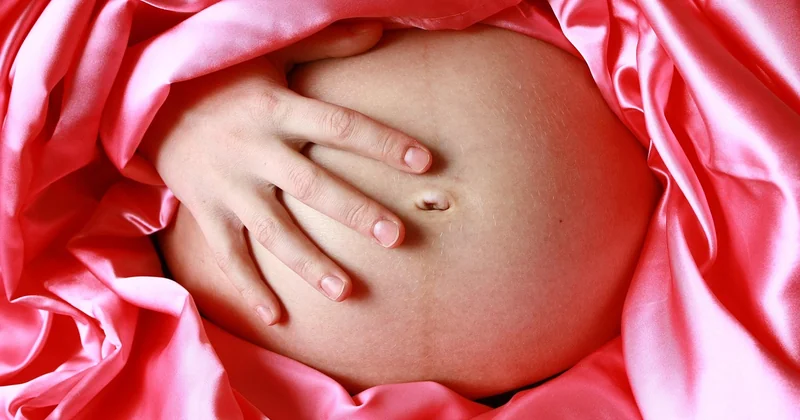
That progression is exactly what's supposed to happen. The color changes because the tissue is dying off and drying out, which is the whole point. Here's roughly what to expect:
| Time since birth | What you'll likely see |
|---|---|
| First 24–48 hours | Moist, yellowish-white, soft. Sometimes clamped. |
| Day 3–5 | Turning brown to dark green, starting to dry and wrinkle. |
| Day 5–10 | Shriveled, black or dark brown, hard. Often hanging by a thin base. |
| Around day 7–14 (sometimes up to 21) | Falls off on its own. A small spot of dried blood or clear fluid underneath is normal. |
A faint smell is also normal while the tissue is dying—it's not the same as the foul smell that signals infection. Think of a slightly stale, musty odor versus something that makes you recoil. Trust your nose on that distinction.
Is it infected, or am I just panicking?
Parental anxiety during the newborn phase is not a moral failing. It's biology. You've just been handed a fragile human and almost no sleep. But knowing the difference between a normal stump and an infected one lets you stop spiraling and start deciding.

Normal signs you can stop worrying about
- Slight bleeding when the stump falls off—often a few drops, sometimes a small crust.
- A tiny amount of dried, dark blood around the base.
- A small pink or red raw spot under the stump for a day or two after.
- Mild odor from the dying tissue.
Red flags worth a call
Call your pediatrician—same day—if you see any of these:
- Spreading redness on the skin around the base, not just at the base itself.
- Swelling or a hard, hot area beside the stump.
- Yellow or green pus with a strong, foul smell.
- Your baby cries when you touch the area, or seems to be in pain.
- Fever in a newborn—this one is always a call, always.
- Active bleeding that doesn't stop within a few minutes of gentle pressure with a clean cloth.
A single spot of blood is not an emergency. Steady bleeding is.
What to do when the stump falls off
You'll probably find it in a diaper or on a onesie. This is a bigger emotional moment than anyone warns you about—some parents keep it, some cry, some feel nothing and then feel guilty about feeling nothing. All of that is fine.
After it falls off, keep the area clean and dry for a few more days. A small amount of crusting or a drop of clear or slightly pink fluid is normal. If the belly button looks red, weepy, or smells foul after the stump is gone, call your doctor. Some babies develop a small pink lump there called an umbilical granuloma—harmless, common, and easily treated in the office with a dab of silver nitrate. Don't poke at it yourself.
How do you survive the first two weeks?
The cord question is really part of a bigger one: how on earth do you get through those first fourteen days? Every new parent asks it, and everyone's answer is a little different because every baby is a little different.
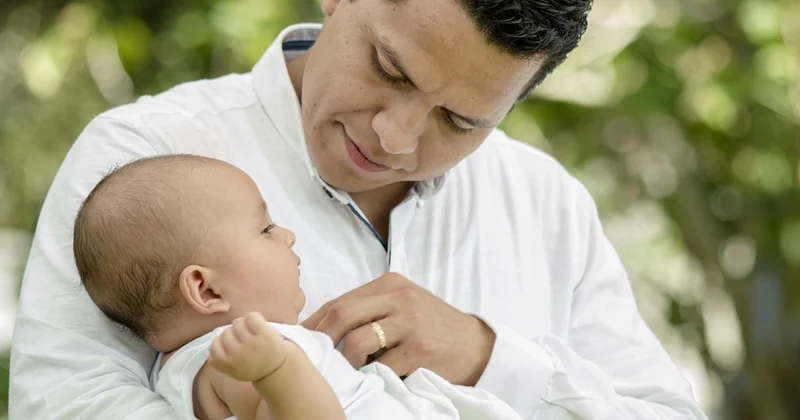
The two weeks after birth are, for most families, the hardest stretch of the entire first year. Your body is recovering, your hormones are crashing, your baby doesn't yet know day from night, and you're learning to do something (feeding, soothing, sleeping in shifts) that no amount of reading prepared you for. Week one often feels surreal; week two is when exhaustion really sinks in. If you had a rough delivery or a NICU stay, add a whole other layer.
Practical survival moves
- Sleep in shifts. If you have a partner, one of you takes 9 p.m.–2 a.m., the other takes 2 a.m.–7 a.m. Four to five hours of uninterrupted sleep changes everything.
- Accept every offer of help. "Can I bring food?" → yes. "Can I hold the baby while you nap?" → yes. "Can I do your laundry?" → yes.
- Lower the bar on everything else. Dishes, thank-you cards, the Instagram-worthy nursery photo—none of it matters this week.
- Learn your baby's hunger cues (rooting, hands to mouth, lip smacking) so you feed before the meltdown starts. Crying is a late cue.
- Keep the cord area boring. Every extra step you add to baby care in week one is one more thing to worry about. Cord care is not where you should be spending mental energy.
The top 10 things a new parent actually needs
Not the registry list. The real one, in roughly the order you'll use it:
- A safe place for the baby to sleep (a bassinet or crib, nothing else in it).
- Diapers, wipes, and a diaper pail you don't hate.
- Feeding supplies—bottles, pump, or a comfortable nursing setup.
- Several swaddles. You will lose them. Buy more than seems reasonable.
- A white noise machine. It is not a luxury.
- Loose onesies that snap or zip easily and don't press on the cord.
- Burp cloths. Many, many burp cloths.
- A nasal aspirator and a baby nail file (yes, before you think you need them).
- A hands-free phone setup or a good podcast queue for night feeds.
- One trusted person you can text at 3 a.m. without apologizing.
Notice what's not on this list: cord care kits, alcohol swabs, or anything marketed specifically for the stump. You don't need them.
Quick answers to the questions parents keep asking
Why is my baby's umbilical cord bleeding after it fell off?
A few drops of blood, or a small crust of dried blood, is very common. The stump was attached to a small vessel, and a tiny bit of bleeding as the last bit detaches is normal. Apply gentle pressure with a clean cloth for a minute or two. Call your doctor if bleeding is steady, doesn't stop, or comes with redness or swelling.
How long does the belly button take to heal on the inside?
The visible stump usually falls off within one to three weeks. The skin underneath generally closes over and looks fully healed within a week or two after that. So a fully settled belly button is often around two to four weeks from birth. If it still looks wet, red, or weeping past that window, get it checked.
Should I be worried about a small pink bump after it falls off?
Probably not—but mention it at your next visit. A small pink, moist-looking lump is often an umbilical granuloma, which is harmless and treated quickly in the office. Don't squeeze, poke, or try to tie it off at home.
What if the stump is still on at three weeks?
That's at the outer edge of normal, and many doctors will take a look. Don't tug on it. If it's dry and there's no redness or discharge, you can usually just keep waiting. If it's moist, smells bad, or looks inflamed, call.
The part nobody puts in the guide
You will probably obsess over that little stump more than it deserves. I did. I checked it every diaper change, took photos at different angles to compare, and once—during a very bad night—considered calling the after-hours nurse line because the stump "looked different." It looked the same. It was just later.
The stump is a small thing doing a temporary job. Its whole existence is to dry up and fall off, and your job is mostly to not interfere with that. Fold the diaper down. Keep it dry. Know the warning signs. Then go take a nap while someone else holds the baby.
In a few weeks, you'll be looking at a soft, healed belly button and won't remember what all the fuss was about. The stump you're staring at tonight will be a memory—and if you're the sentimental type, maybe tucked in a little envelope somewhere, which is entirely your call.