
Budget-friendly family activities for weekends: the decision tree that actually works
Saturday morning. It is 9:47. One child is bored, the other is hungry, and you have €23 in your wallet until payday. You open your phone, type "things to do near me," and get 400 results — half of them cost €60, the other half assume you live somewhere with a beach.
I know this scene because I have lived it more times than I care to count. Two kids, a mortgage, and a habit of tracking what we spend on weekends out of pure curiosity. Last spring I ran the numbers on our own family for eight weeks straight. The result surprised me: our cheapest weekends were not the ones where we stayed home. They were the ones where we left the house with a plan.
That distinction matters more than any list of ideas. Most families do not struggle to find something free to do. They struggle to pick, fast, with the weather they actually have and the kids they actually have. This article is built around that problem — a way to choose in under five minutes, plus concrete numbers so you know what "budget-friendly" really means.
Key takeaways
- A decision tree beats a list: filter by weather, then by age, then by time available.
- Free weekend activities usually cost €0 to €12 once you count snacks, parking and the inevitable "I'm thirsty."
- Toddlers and teenagers need opposite formats — plan separately or you'll lose both.
- Your local library and municipal website are the two most underused free-activity sources in most towns.
- The biggest hidden cost of a "free" outing is driving. Fuel and parking often exceed the ticket price.
- Teens disengage from anything that feels like a scheduled activity. Give them a role instead.
How to choose a family activity in under five minutes
Forget browsing. Browsing is the enemy. When you have kids asking "what are we doing today" every ninety seconds, you need a filter, not a menu.
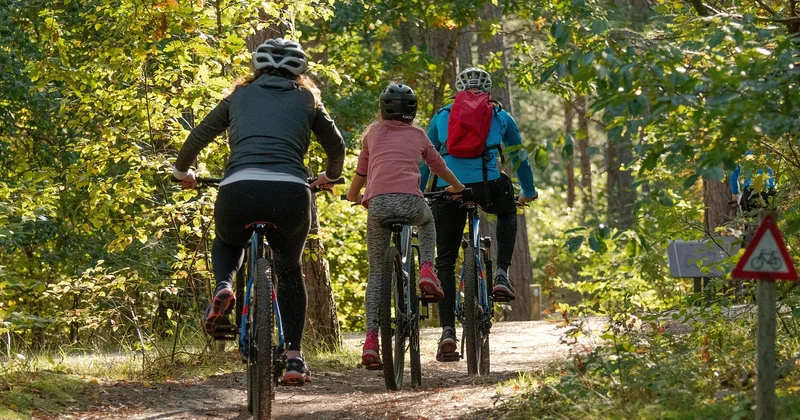
Step one: what is the weather doing right now?
This single question eliminates half your options before you waste a thought on them. Rain does not mean staying inside with nothing to do — it means shifting the category, not canceling the day.
- Sunny and dry: anything outdoors, including the free ones. Move fast, because good weather weekends get crowded by 11am.
- Grey but not raining: the sweet spot. Parks are empty, trails are quiet, and nobody melts down from heat.
- Actually raining: indoor, and preferably somewhere with a lot of floor space — museums count, bowling doesn't at €9 a game.
Step two: what ages are you working with?
I made this mistake for two years. I planned one outing for a four-year-old and an eleven-year-old, and it satisfied neither. The younger one was exhausted by the walking, the older one was bored by the playground. We spent €34 and everyone was miserable by 2pm.
The fix is simple and slightly annoying: alternate weekends. One Saturday is built around the younger child, the next around the older one. On the rare weekend both are aligned, you get the golden outing. But designing for the overlap every single time is how you burn out and start spending money to compensate.
Quick filter for mixed-age families
Pick activities with a variable format — places where a small child can run in circles while an older one reads a plaque or follows a trail. Botanical gardens, waterfront promenades, large parks with both a playground and open space. Avoid anything with a fixed route and a fixed duration: guided tours, boat trips, escape rooms. Those punish age gaps brutally.
What "budget-friendly" actually costs, in real numbers
Here is where most articles go vague. They say "cheap" and let you imagine whatever you want. Let me be specific, using our own tracked spending across roughly forty weekend outings.

| Activity type | Direct cost | Hidden costs | Realistic total |
|---|---|---|---|
| Local park or playground | €0 | Snacks, ice cream van | €0–8 |
| Public library visit | €0 | Parking if city center | €0–4 |
| Nature walk or trail | €0 | Fuel, parking, café stop | €5–18 |
| Free museum day | €0 entry | Transport, gift shop ambush | €6–20 |
| Home cooking project | €8–15 ingredients | None if you plan | €8–15 |
| Cinema matinee | €5–7 per ticket | Popcorn, drinks | €28–45 |
Look at that last row against the others. A single cinema trip with two kids costs more than four of the outings above it combined. That is the whole game. It is not that free activities are better — it is that the paid ones are expensive enough to crowd out everything else in the month.
One honest failure story: I once drove forty minutes to a "free" family festival. Parking was €7, the kids demanded crepes within ten minutes, and we left after an hour because it was packed. Total: €26, plus half a tank of fuel, for an experience my youngest described as "the loud one." Free is a label on the entry, not on the day.
What can you do on the weekend with no money?
Plenty, and the constraint is usually creativity rather than cash. When the budget is genuinely zero — not "cheap," actually zero — your options narrow to things that require no entry fee, no fuel, and no purchases. That is a shorter list, but a better one than you'd expect.

- Walk a route you have never walked. Not a hike. Just a street or path within a mile of home you've never taken. Kids notice new things more than they notice famous things.
- Library day with a mission. Each child picks a book for the other one. The negotiation alone fills an hour, and libraries run free weekend programs in most towns.
- Kitchen challenge with what you already own. Open the pantry, set a rule — everyone gets to add one ingredient — and see what happens. Some meals are bad. Those become the funny stories.
- Blanket fort and a film you already own. Zero cost, high return, works from age three to about eleven.
- Backyard or balcony camping. Tent optional. Sleeping bags on the grass and a late bedtime are the actual product.
The catch nobody mentions: zero-euro weekends work best when you announce them as a plan rather than letting them happen as a fallback. Kids read adult disappointment with unnerving accuracy. If you present a free weekend as the thing you chose, they treat it as the thing you chose.
How to find free kid-friendly activities near you
Search engines give you the commercial results first. The free stuff hides in three places, and I check them in this order every Friday evening:
- Your municipal website. Buried under "culture" or "events," usually updated weekly. This is where free concerts, open days and library programming live.
- The library's own calendar. Separate from the town site, and often includes craft sessions and reading hours that never appear anywhere else.
- Local parenting groups on social platforms. Not for the recommendations — for the warnings. Someone will always post "don't bother, it's mobbed by 10."
One more source people forget: free entry days at museums. In many European cities, national museums open their permanent collections at no charge on the first weekend of the month. It is a stable, well-known arrangement — not a secret, but persistently overlooked.
Rainy weekend? The indoor playbook
Rain is not a problem to solve. It is a constraint that makes the decision for you, which is honestly a relief.
Family activities at home with teenagers
Teens will not join a "family activity." Say those words out loud in a teenager's presence and watch the door close. What works instead is giving them ownership of a piece of the day.
In our house, the version that stuck: my eldest plans and cooks one meal per rainy weekend, entirely her choice, with a set ingredient budget. She decides, she executes, we eat. It started as a chore assignment and turned into something she actually defends. Cost per meal: roughly €11 for four people, which is less than two fast-food kids' meals.
The principle generalizes. Board game night where the teen picks the game and explains the rules. A film chosen by them, with a required five-minute pitch beforehand. The shift from participant to host is what makes it land.
When the kids are small
Different animal entirely. Under-fives need movement, not entertainment. A hallway with masking tape lines on the floor outperforms most paid soft-play centers for about twenty minutes, which is roughly the maximum attention span you're working with anyway.
- Tape maze in a corridor — free, ten minutes to build, forty minutes of use.
- Recycled-material building with boxes, tape and scissors you already have.
- Dance hour with a playlist the kids control.
Notice the pattern: all of these are movement-based. Small children do not get bored of activities, they get bored of staying still. Any indoor plan that doesn't involve moving their legs will fail within twenty minutes, and no amount of craft supplies fixes that.
The weekend split that saved us money without trying
Here is the structural change that did more for our budget than any individual idea. We stopped treating Saturday and Sunday as two identical days.
Saturday is the outing. That is when we leave, spend, and accept that a day out costs something. Sunday is the home day. No driving, no entry fees, no "let's just grab something while we're out."
Before this, we spent on both days, usually without deciding to. Two moderately expensive days add up to more than one deliberate one. After eight weeks of tracking, our weekend spending dropped by roughly 40 percent — and, more surprisingly, nobody complained. The kids started defending Sunday as "their" day because it was the one with no schedule.
If you take one thing from this article, take that split. It costs nothing to try and it removes the daily decision that drains both your wallet and your patience by Sunday afternoon.
Which leaves the real question, the one that doesn't show up in any search bar: is a weekend supposed to be memorable, or is it supposed to be restful? I spent two years assuming the answer was "memorable," and I have the receipts to prove it made everyone tired. Now I aim for one good hour per day and let the rest be ordinary. The kids remember the hour. I remember the quiet.